

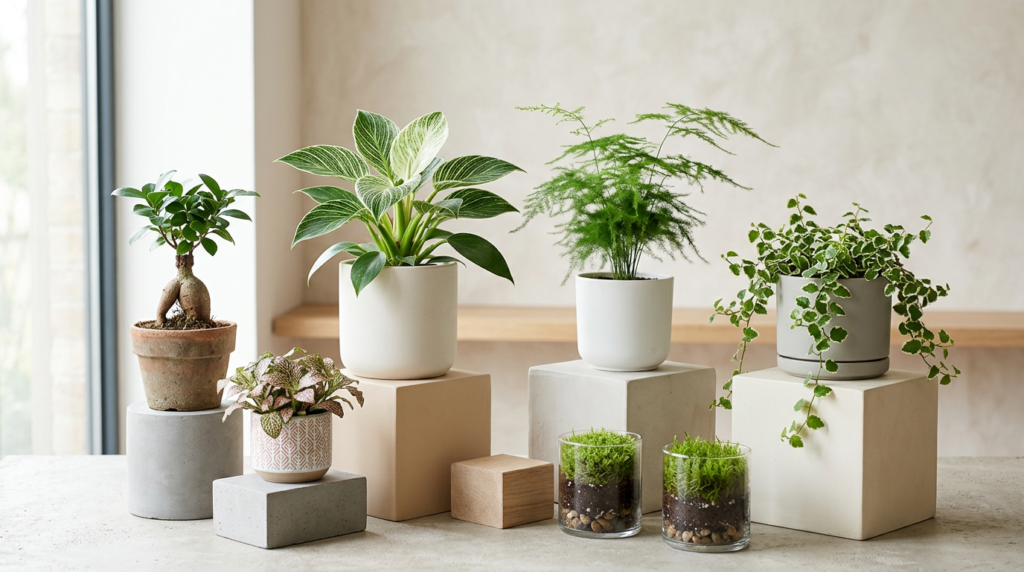
You’ve just got a closed terrarium and you’re not sure which plants to choose? Not all species adapt to the enclosed, humid environment of a terrarium. Some plants thrive in these conditions, while others wilt within a few weeks.
This guide presents 6 plants that flourish in closed terrariums, selected for their ease of care, suitable growth habits and high survival rate. Whether you’re a complete beginner or a plant enthusiast, these species guarantee a successful terrarium.
The 3 Criteria for Choosing Terrarium Plants
Tolerance for High Humidity
A closed terrarium maintains a constant humidity level between 70% and 90%. Tropical and sub-tropical plants adapt to this naturally, while cacti and succulents rot quickly in these conditions.
Compact and Slow Growth
It is best to choose mini plants (between 5 and 15 cm in height). The limited space of a terrarium requires plants with slow growth or dwarf varieties. A too vigorous plant will quickly take over the space and smother the other plants.
Adaptation to Indirect Light
Terrariums are usually placed on a desk, shelf or coffee table, away from direct sunlight. The selected plants must thrive in indirect light or partial shade.
Geometric Terrarium vs Sealed Jar
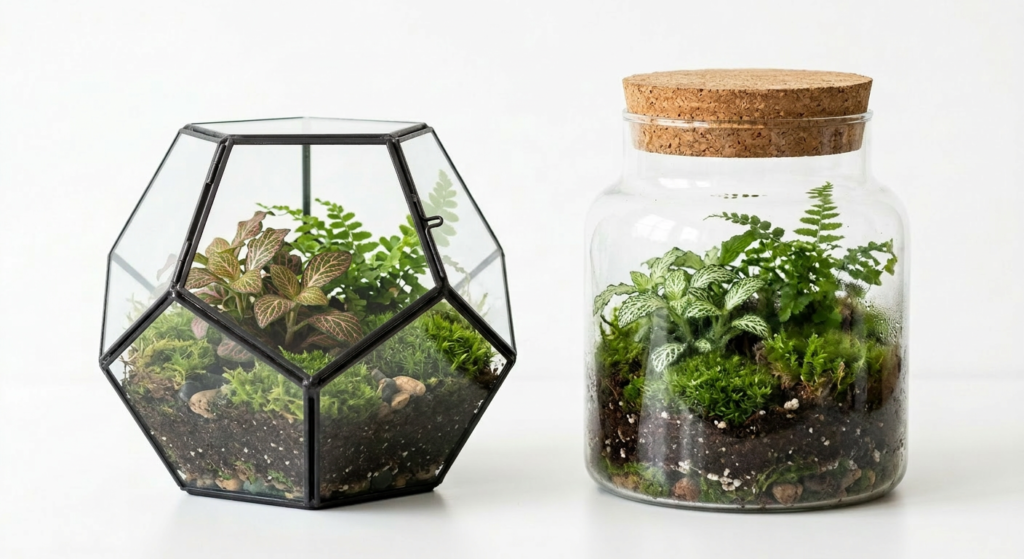
Not all closed terrariums create the same environment. This distinction slightly influences plant selection.
Geometric terrarium (glass and metal, Tiffany style)
- Micro air circulation between the panels
- Humidity: 70-85%
- Some plants requiring a slight supply of air adapt well
Sealed jar (with cork stopper)
- Very little air circulation
- Humidity: 95-100%
- Only pure tropical plants survive
This difference explains why some species like the Ficus ginseng thrive in a geometric terrarium but fail in a totally sealed jar.
Top 6 Plants for Closed Terrariums
1. Fittonia (Mosaic Plant)
Difficulty level: Very easy
Adult size: 10-15 cm
Light: Indirect to partial shade
Humidity: 70-95%
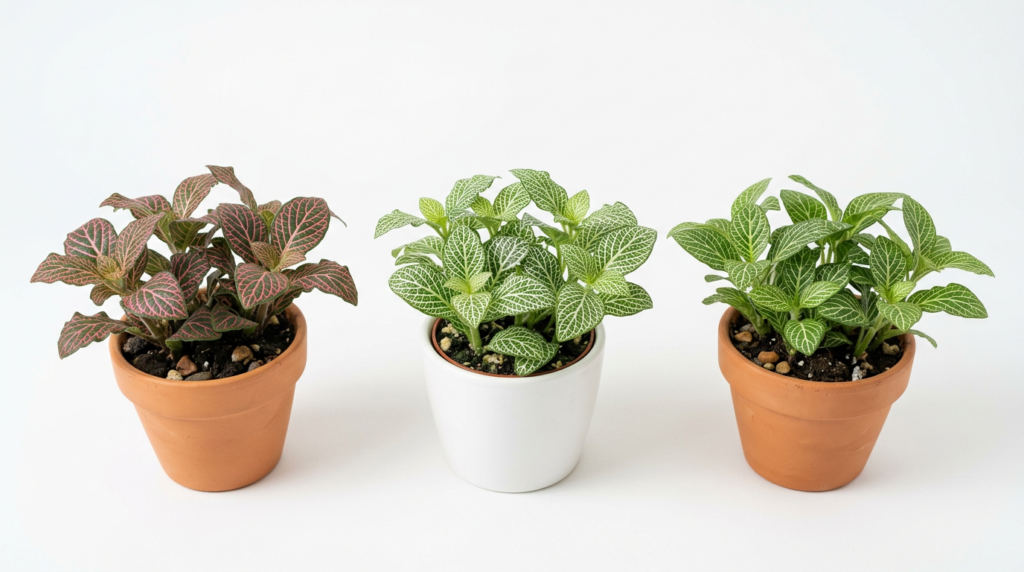
The Fittonia, also known as the mosaic plant for its pink, white or green veined foliage, is the ideal choice for beginners. This South American plant naturally thrives in humid tropical undergrowth.
Why it works:
The Fittonia tolerates a wide range of humidity and adapts to almost any closed terrarium. Its slow growth and compact form make it a perfect ground cover. The available varieties (pink, white, green) allow you to add colour effortlessly.
Placement tips:
Place the Fittonia in the foreground or on the sides of the terrarium. It creates a colourful carpet at the foot of taller plants. Pairs particularly well with mosses and Ficus ginseng.
Where to buy: Truffaut, Jardiland, Plante pour tous
2. Ficus Pumila (Creeping Fig)
Difficulty level: Very easy
Adult size: Spreads 20-30 cm
Light: Indirect
Humidity: 70-90%
The Ficus pumila is a miniature fig tree with small round leaves that naturally carpets the floor and climbs the walls of the terrarium.
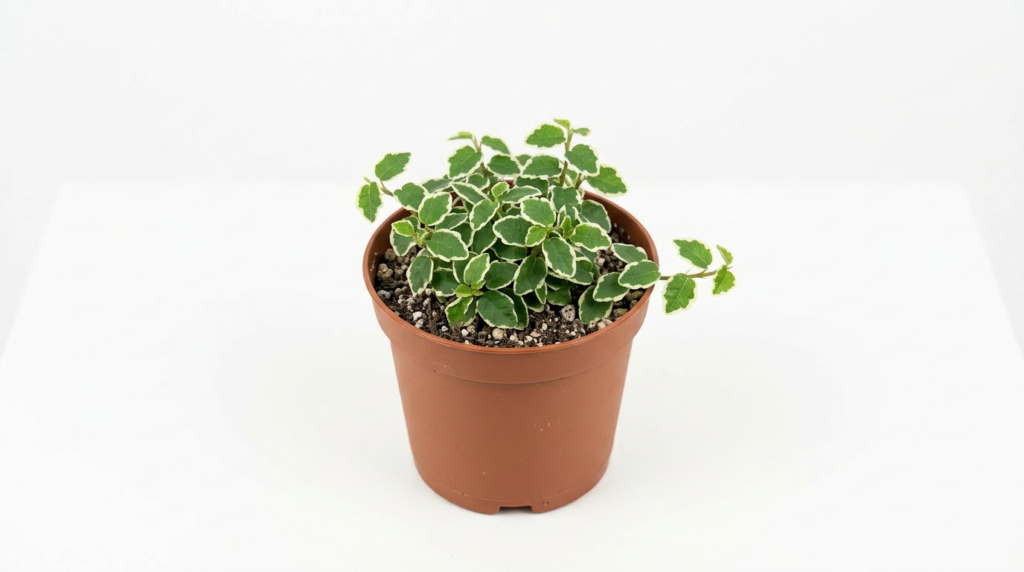
Why it works:
This robust plant easily adapts to terrarium conditions. It gradually fills the space, creating a lush jungle effect. Its adventitious roots allow it to cling to the glass, adding a vertical dimension to the landscape.
Placement tips:
Install it in the background or on one side. It will naturally climb the walls within a few weeks. Trim it every 3-4 months to control its growth if necessary.
Where to buy: Truffaut, Jardiland, Plante pour tous
3. Ficus Ginseng (Ficus Bonsai)
Difficulty level: Easy
Adult size: 15-25 cm (in terrarium)
Light: Bright indirect
Humidity: 60-80%
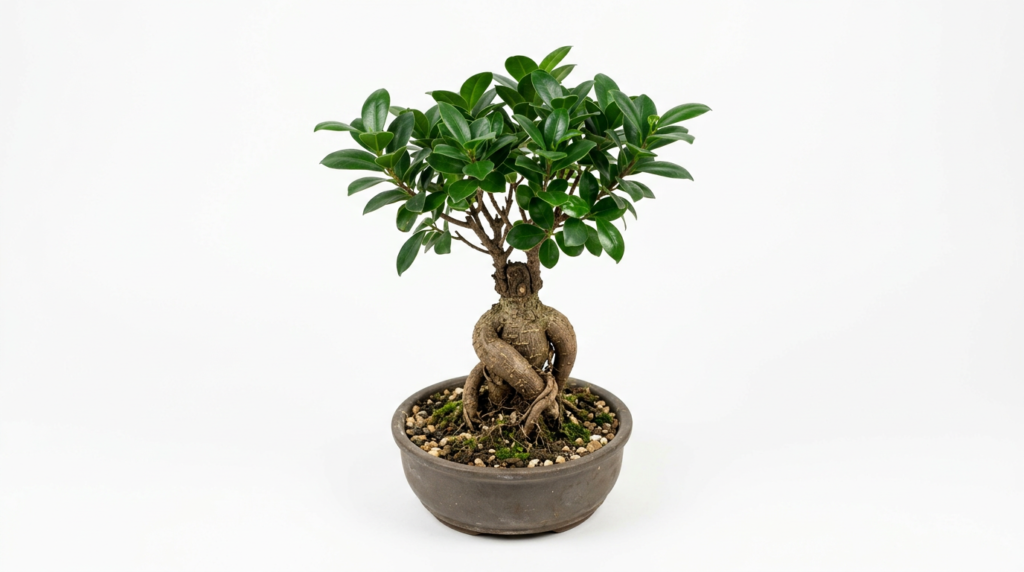
The Ficus ginseng, recognisable by its thick aerial roots and sculpted trunk, brings an architectural dimension to the terrarium.
Why it works:
Contrary to popular belief, the Ficus ginseng adapts well to geometric terrariums thanks to their slight ventilation. Its air requirements are partially met, and its extremely slow growth makes it a permanent element of the landscape.
Placement tips:
Position it as the central or focal element. Its sculptural appearance naturally draws the eye. Avoid pairing it with fast-growing plants that could smother it.
Important note: This plant works better in a geometric terrarium than in a totally sealed jar.
Where to buy: Truffaut, Jardiland, Botanic
4. Philodendron White Wave
Difficulty level: Easy
Adult size: 15-30 cm
Light: Indirect to partial shade
Humidity: 70-85%
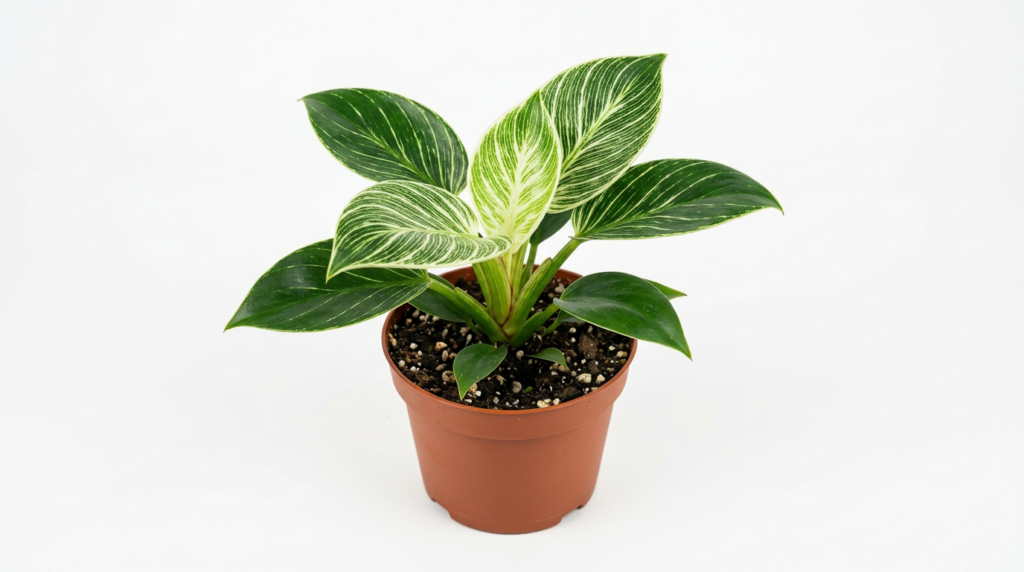
The Philodendron offers striking decorative foliage. Compact varieties such as the Philodendron White Wave feature textured leaves that create volume.
Why it works:
A tropical plant par excellence, the Philodendron thrives in humid conditions. Unlike outdoor varieties, its growth remains moderate in a terrarium, limited by the available space. Very resilient, it forgives care mistakes.
Placement tips:
Place it in the centre as the main plant. Its dense foliage forms a setting for the smaller plants placed in front. Allow enough space: although slow-growing, it can become quite large.
Where to buy: Truffaut, Jardiland, Botanic, Plante pour tous
5. Asparagus Plumosus
Difficulty level: Easy
Adult size: 15-20 cm (in terrarium)
Light: Indirect
Humidity: 65-85%
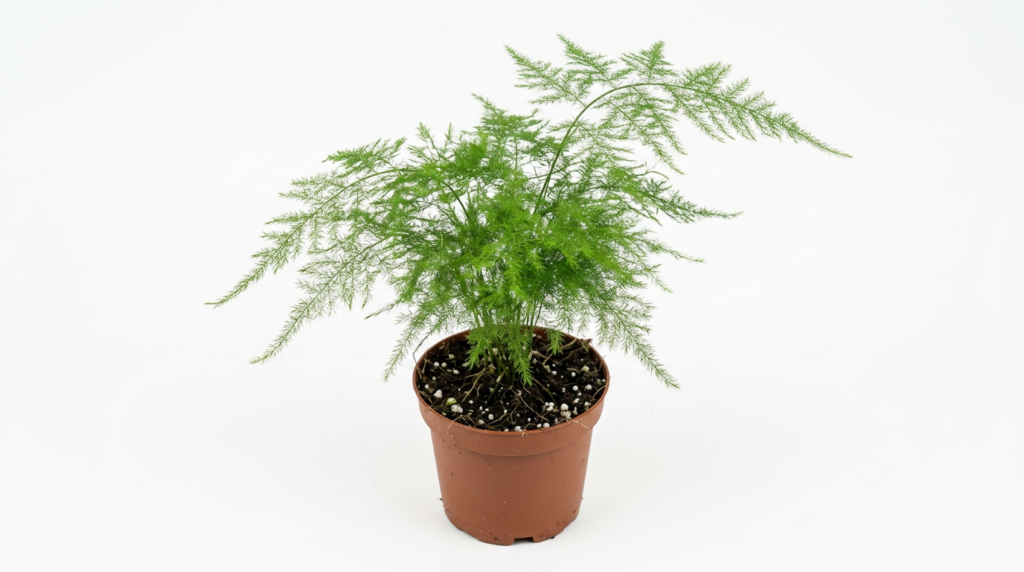
The Asparagus plumosus features fine, airy foliage that contrasts beautifully with the broad leaves of other plants.
Why it works:
This asparagus fern appreciates the constant humidity of the terrarium. Its delicate foliage adds lightness and texture without taking up much floor space. Its slow growth means it can be kept for several years without excessive pruning.
Placement tips:
Position it high up or in the background to create depth. Its trailing foliage softens the geometric lines of the terrarium. Pairs well with Fittonia and mosses.
Where to buy: Truffaut, Jardiland, Plante pour tous
6. Mosses (Ball and Flat)
Difficulty level: Very easy
Adult size: Variable depending on type
Light: Low to indirect
Humidity: 85-100%
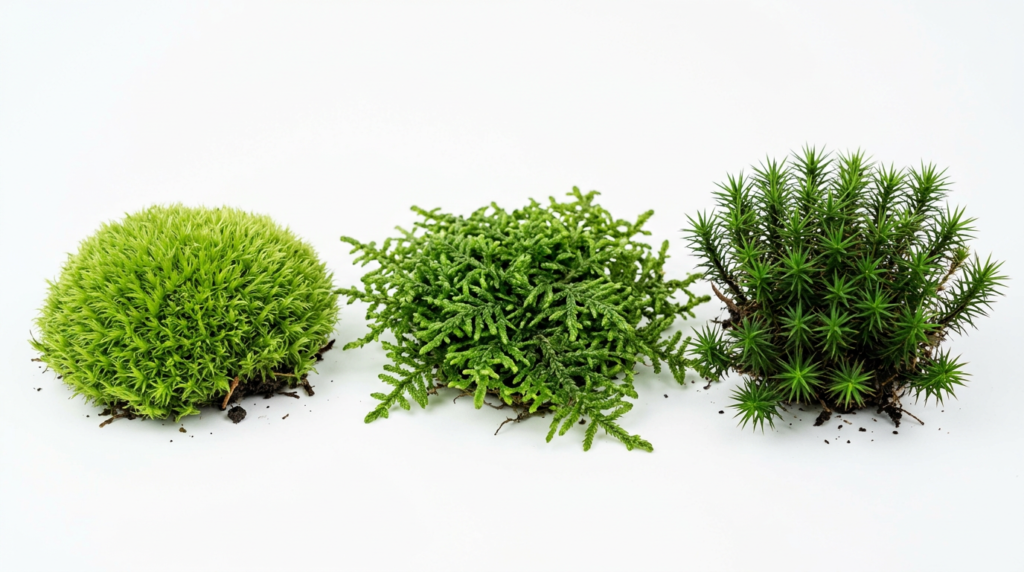
Mosses transform a simple plant arrangement into a true miniature ecosystem. They play an essential role in the terrarium landscape.
Ball moss (Leucobryum glaucum):
Small soft green spheres (2-10 cm in diameter) that add relief and volume. Place them at the base of plants, between stones or in groups to create visual points of interest.
Flat moss (Hypnum, Polytrichum):
A dense plant carpet that covers the substrate and gives a natural forest feel. It hides bare soil and creates a uniform base for the other plants.
Why it’s essential:
Mosses thrive in the high humidity of the terrarium with no maintenance at all. They help greatly to maintain moisture in the soil. They fill empty spaces, create depth and give the composition a professional finish. A terrarium without moss lacks a natural feel.
Usage tips:
Choose according to your taste: flat mosses for a natural forest effect and ball mosses for a meadow effect with relief. You can also combine both. Guaranteed result: a natural, lush woodland or meadow feel.
Important point:
Do not use preserved moss for terrariums. It is not suited to watering and humid environments.
Where to buy: Truffaut, Jardiland, Plante pour tous
Where to Find These Plants?
Specialist garden centres and retailers
Truffaut
Excellent selection of indoor plants with several varieties available and specialist advisors. Available throughout France, including in cities. Price: €3-10 per plant. Online: truffaut.com
Plante pour tous
Specialist retailer with a wide range of tropical and terrarium plants. Competitive prices: €3-8 per plant. Located in Paris, Lyon and Bordeaux only. In-store sales only. Website: plantespourtous.co
Jardiland
Wide choice of tropical plants with specialist staff. Available throughout France. Price: €3-8 per plant. Online: jardiland.fr
Botanic
Focus on organic and locally sourced plants. Eco-friendly approach with good quality. Price: €4-9 per plant. Online: botanic.com
Accessible large retailers
Leroy Merlin
Good selection of green plants in the garden section. Availability varies by store.
Bricorama
Some varieties of green plants in the garden section. Availability varies by store.
Large retailers with a garden section
Green plants can also be found at some large retailers with a garden section, such as Castorama or IKEA, though with a limited choice.
Buying tips
Check before you buy:
- Ask a specialist in the garden section for advice
- Healthy foliage with no brown or yellow spots
- Soil that is moist but not waterlogged
- No visible pests on the leaves
- Healthy roots if you can see the bottom of the pot
Plants to Absolutely Avoid
Some popular plants do not survive in a closed terrarium despite their visual appeal.
❌ Cacti and succulents
Reason: They rot in high humidity. They need a dry environment.
❌ Fast-growing upright plants (Pothos, standard Monstera)
Reason: They quickly outgrow the terrarium. They need a lot of space.
❌ Orchids
Reason: Too delicate and demanding for beginners. They need very specific conditions.
❌ Outdoor bonsai (maple, pine, juniper)
Reason: They need fresh air and temperature variations. They die in a closed terrarium.
FAQ: Frequently Asked Questions
2 to 5 small plants maximum, plus a few mosses. An overcrowded terrarium lacks the space for each plant to thrive.
Yes, prioritise plants with similar humidity and light requirements. All the plants listed in this guide are compatible with each other.
No, the limited space naturally slows growth. Prune once or twice a year if necessary to maintain the composition.
No. The closed terrarium naturally recycles nutrients. Adding fertiliser would unbalance the ecosystem and encourage excessive growth. Additionally, mosses are very sensitive to fertilisers and can deteriorate as a result.
Leaves yellowing quickly, mould on stems, visible rot = the plant cannot tolerate the conditions. Remove it immediately.